ADAM certification management platform for automotive suppliers
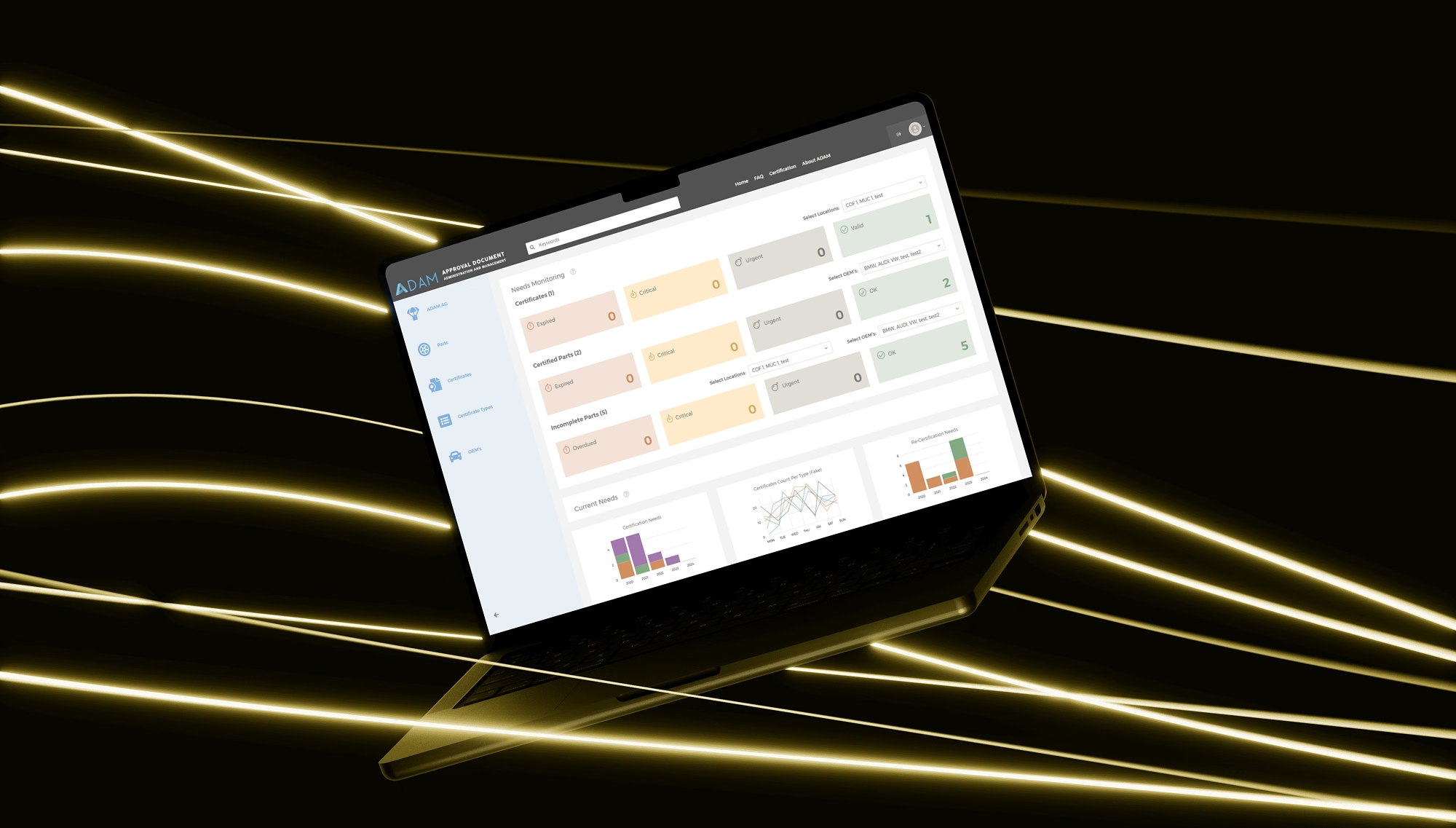
ADAM (Approval Document Administration and Management) is a startup building a platform that helps automotive suppliers manage the product certification (homologation) required to sell their parts in different countries. To take the idea to market, we teamed up to build the product.
Executive summary
A dedicated frontend and delivery team was built around the product, with a clear split of responsibility: the client kept the product vision and developed the backend, while we took the frontend, UI/UX support and delivery setup. We turned the requirements and the client’s initial designs into a web platform for automotive suppliers to manage the product certification process.
The delivery setup made releases predictable, and the product went from idea to market in months.

The challenge
No frontend team and no delivery setup
The client had a product idea, defined requirements and initial designs, but no frontend developers and no way to release it. Besides the interface, the product needed development, user acceptance and production environments, and an automated way to move changes between them. All of this had to be set up alongside product development.
A specialized domain that had to be learned fast
Product certification and homologation have their own vocabulary: certificate types for each country, product categories, regulations, authorities, and production start and end dates for vehicle models. We had to get up to speed on all of this.
A dense, data-heavy interface
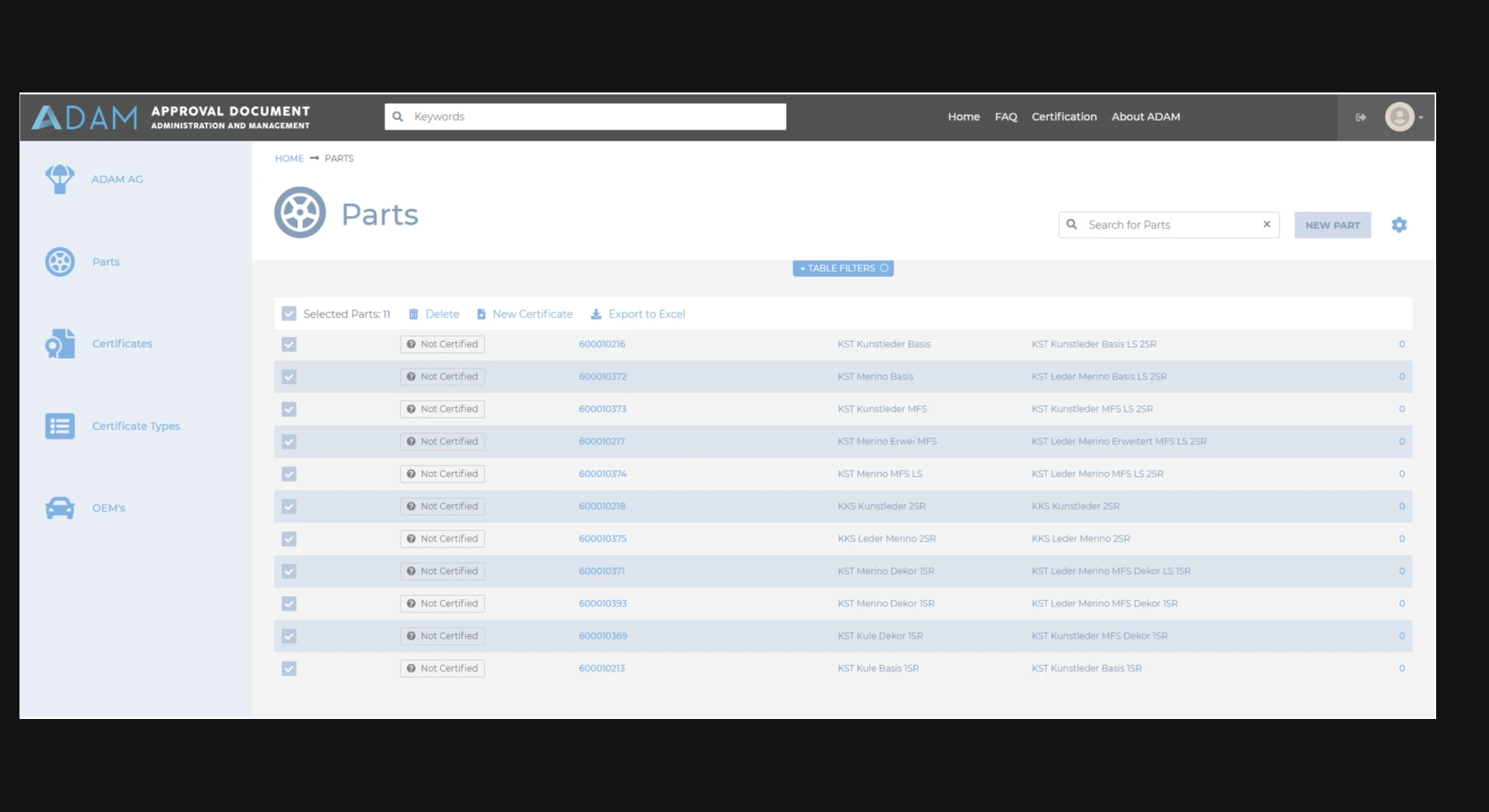
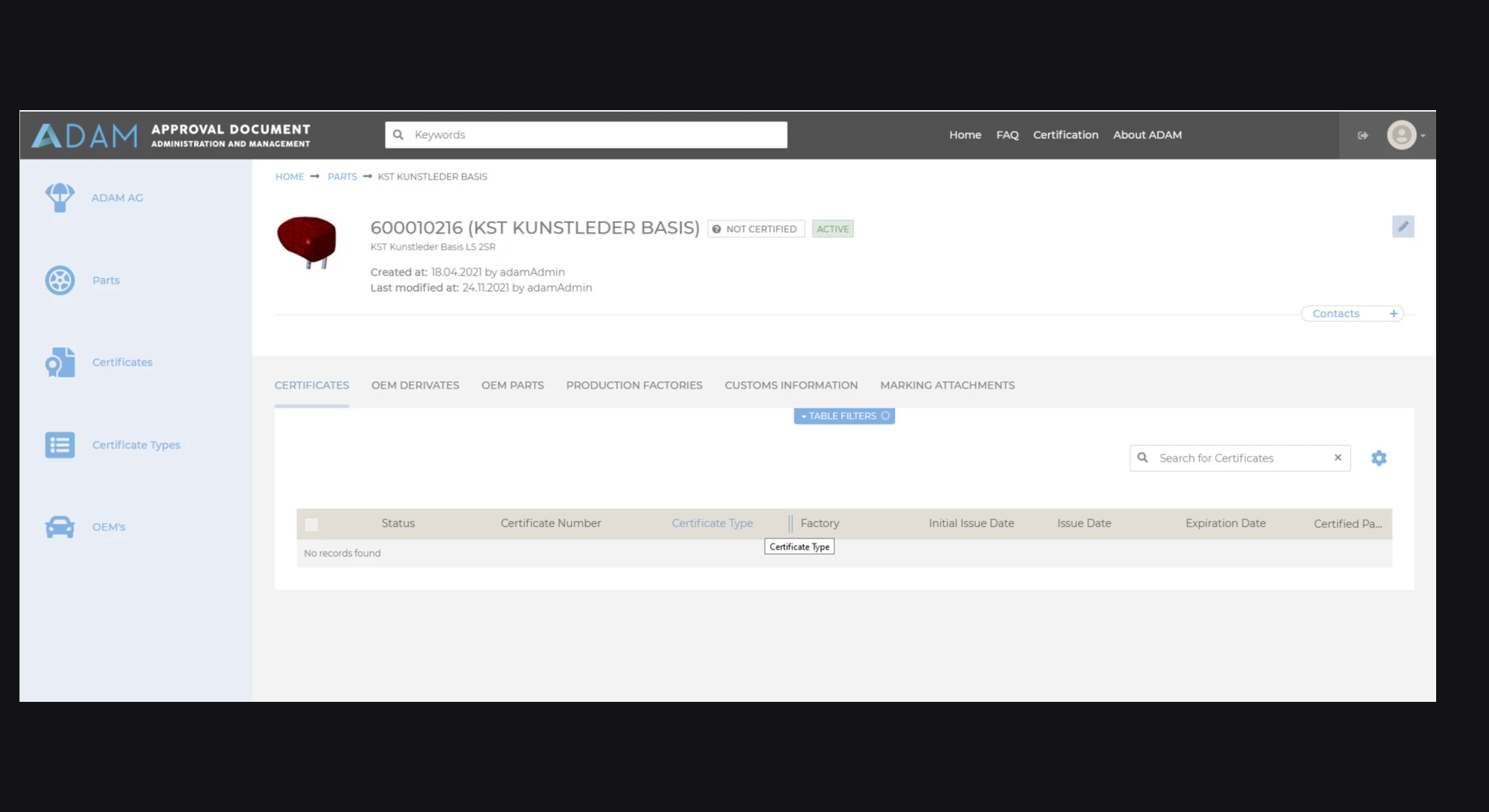
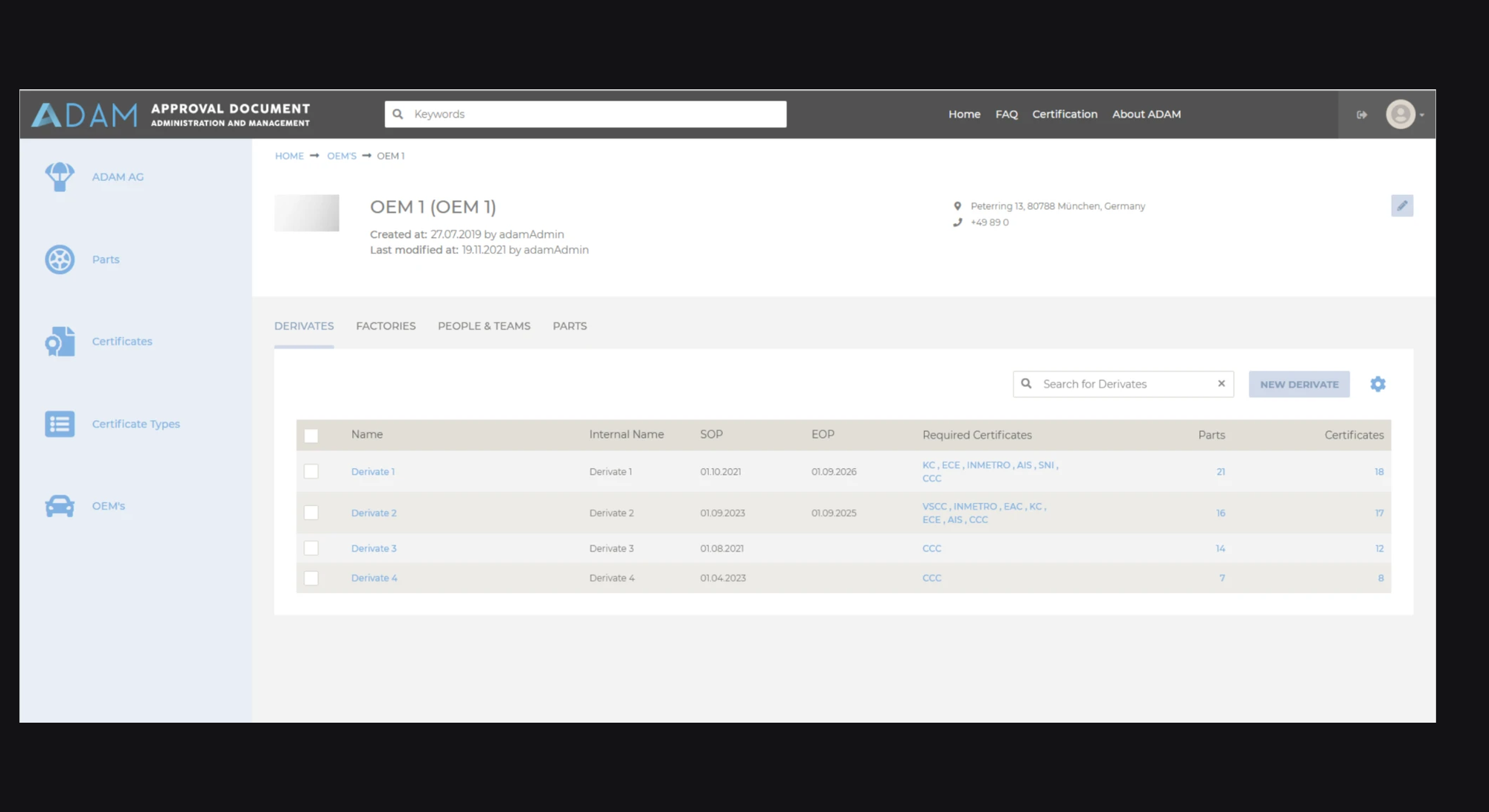
Parts, certificates, regulations, car manufacturers and vehicle models are all connected, and users move between these connections every day. The interface had to make the relationships easy to follow without losing context.
Every entity comes with its own tabs, tables, filters, column settings, bulk actions and exports, and all of them had to behave consistently across the product and stay easy to change as it evolved.
Building the frontend while the backend was still evolving
The frontend and the backend were developed in parallel by different teams. The frontend had to move ahead before the APIs were ready, and changes in the backend could break parts of the interface that were already done.
The solution & engineering approach
Delivered scope
Dedicated team
Two frontend developers, a UX designer and a DevOps engineer, working alongside the client’s backend team and covering the frontend, UI/UX and delivery setup.
UI/UX support
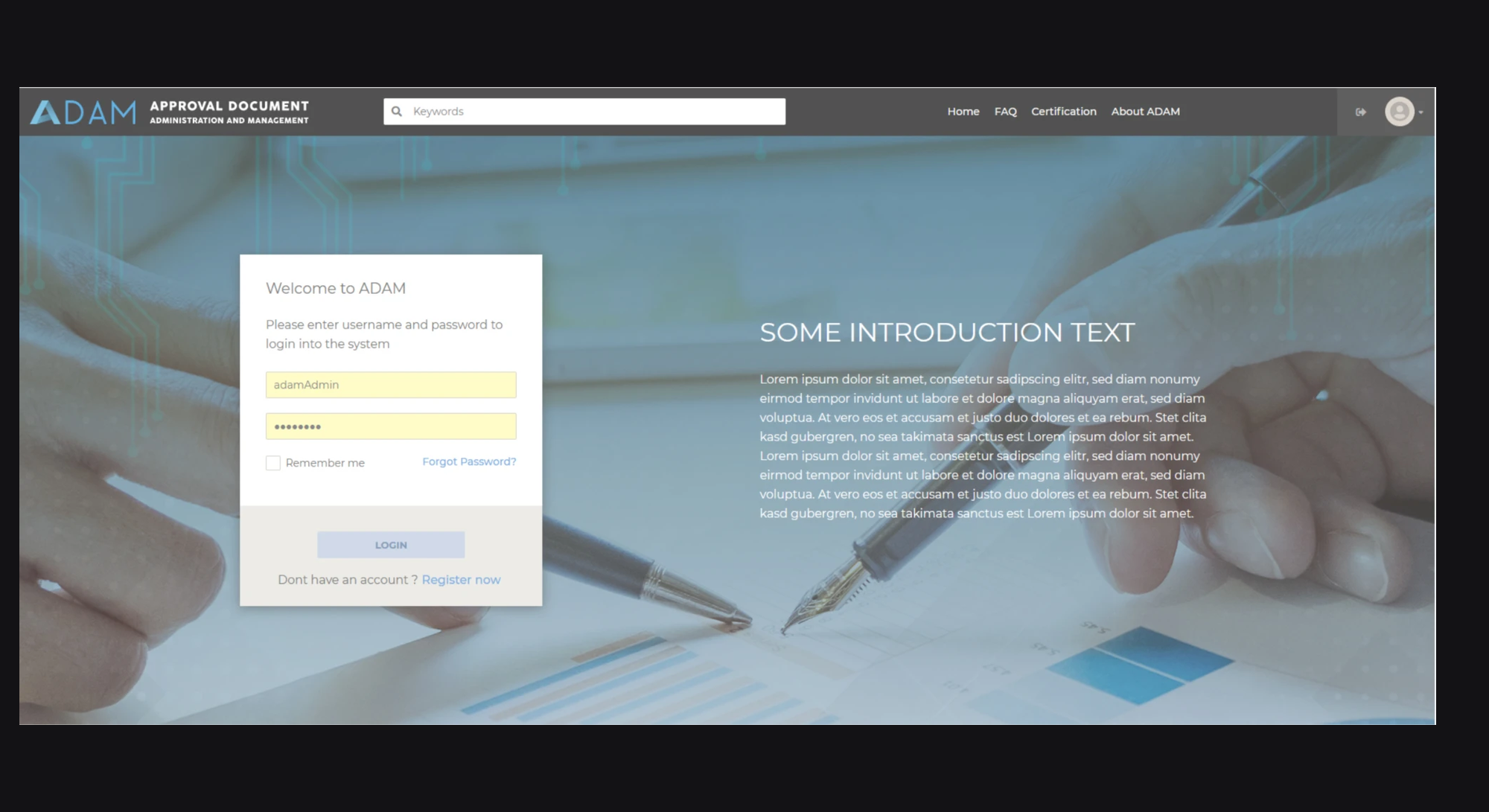
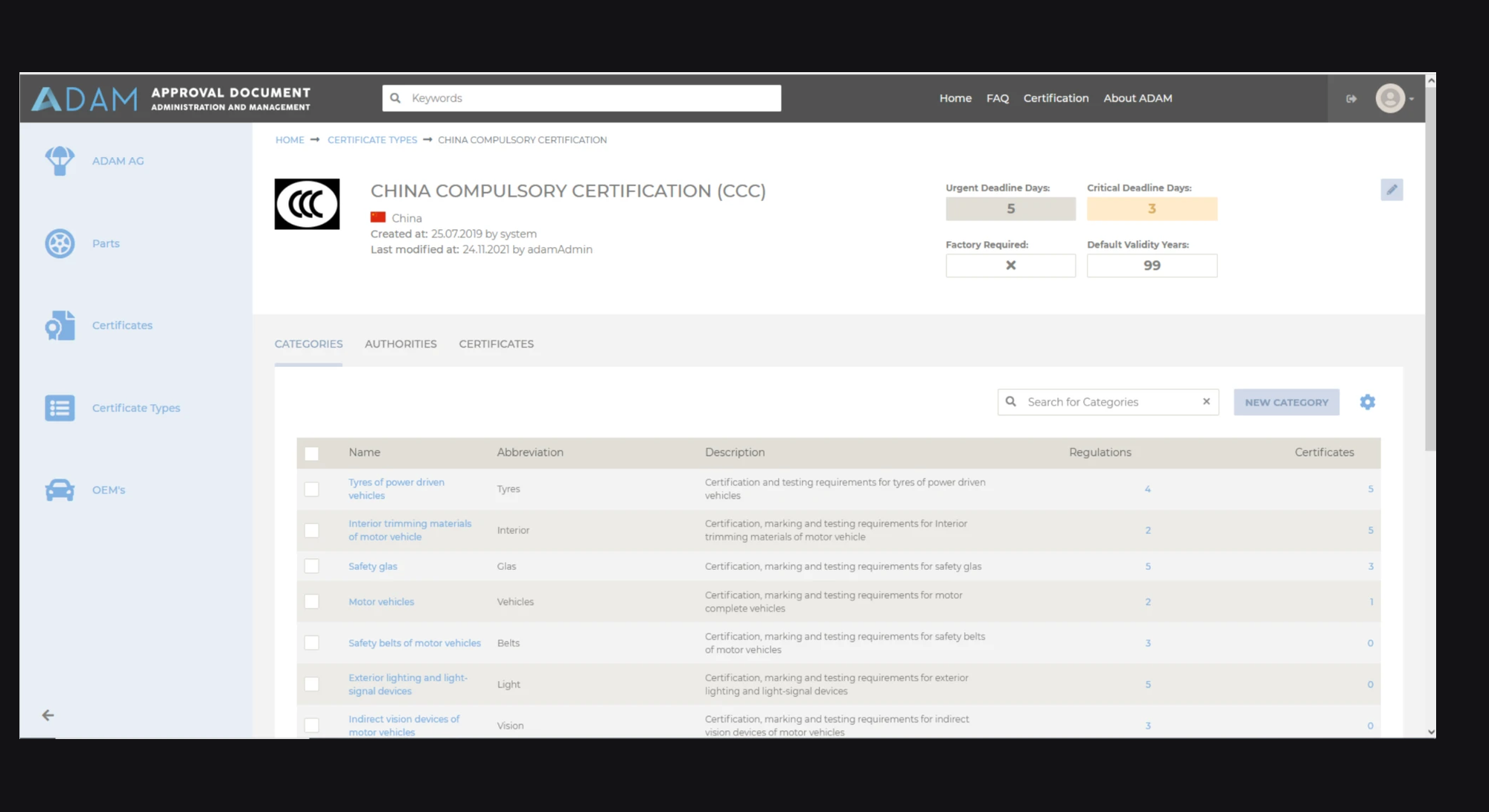
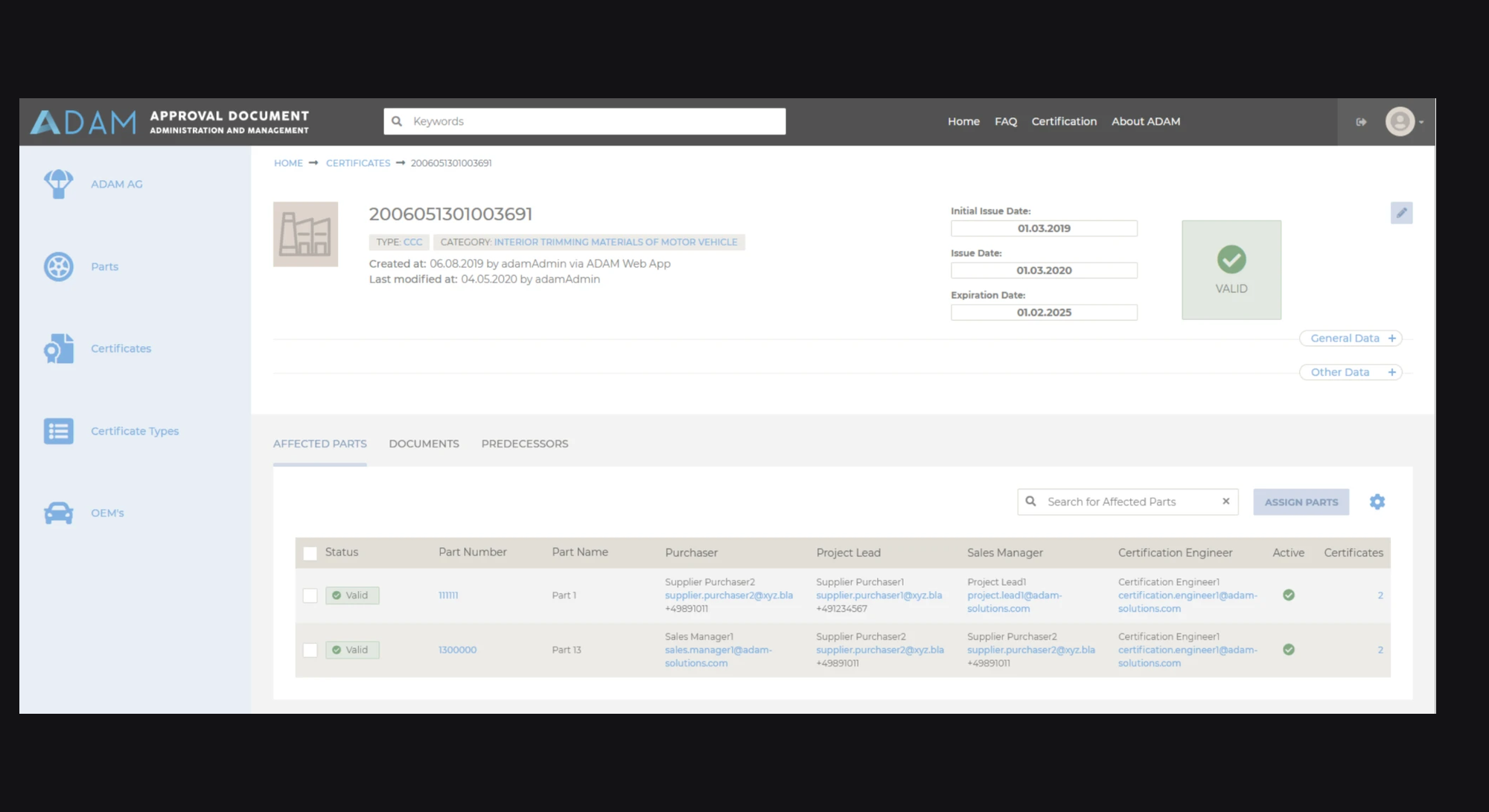
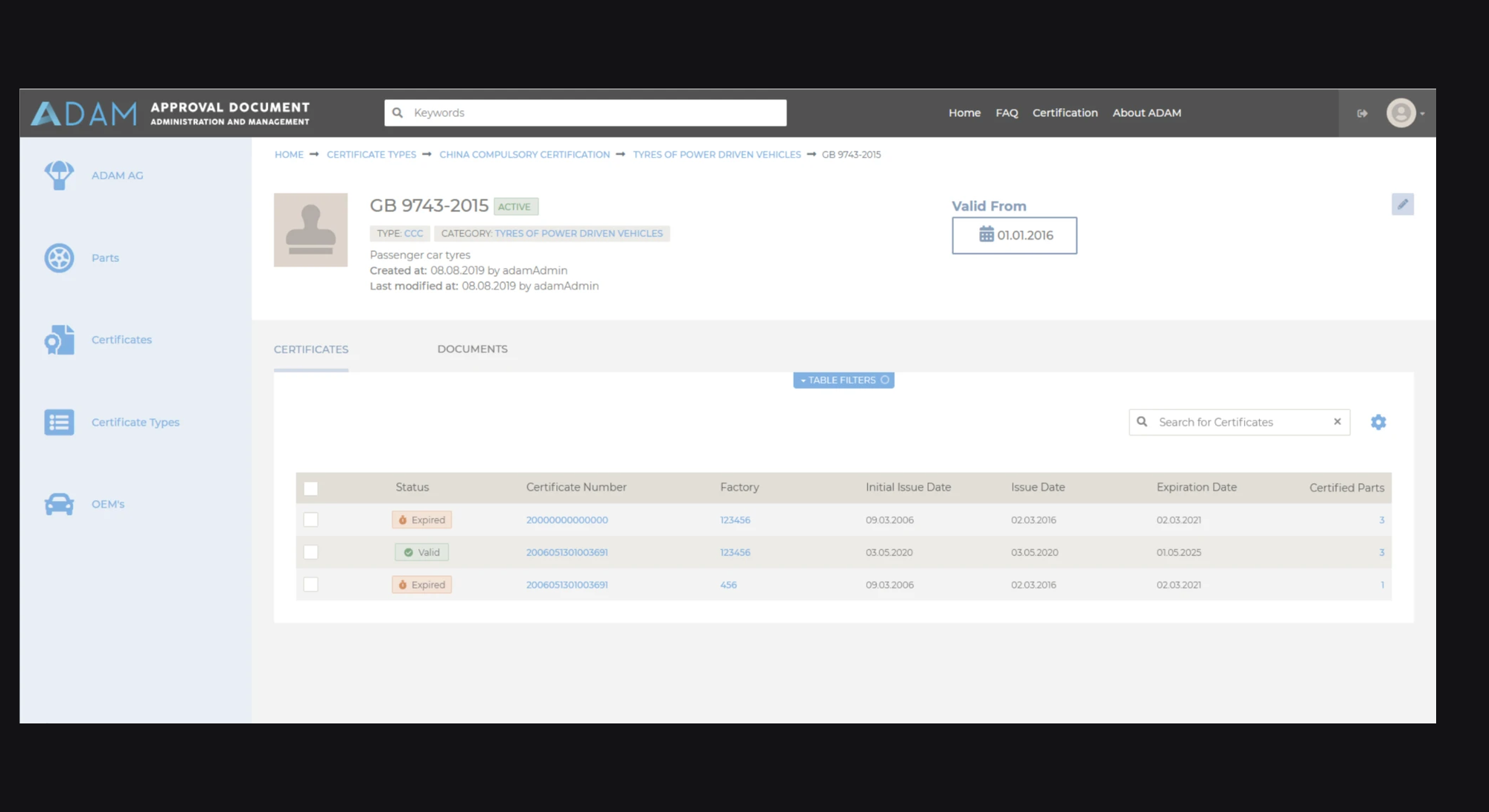
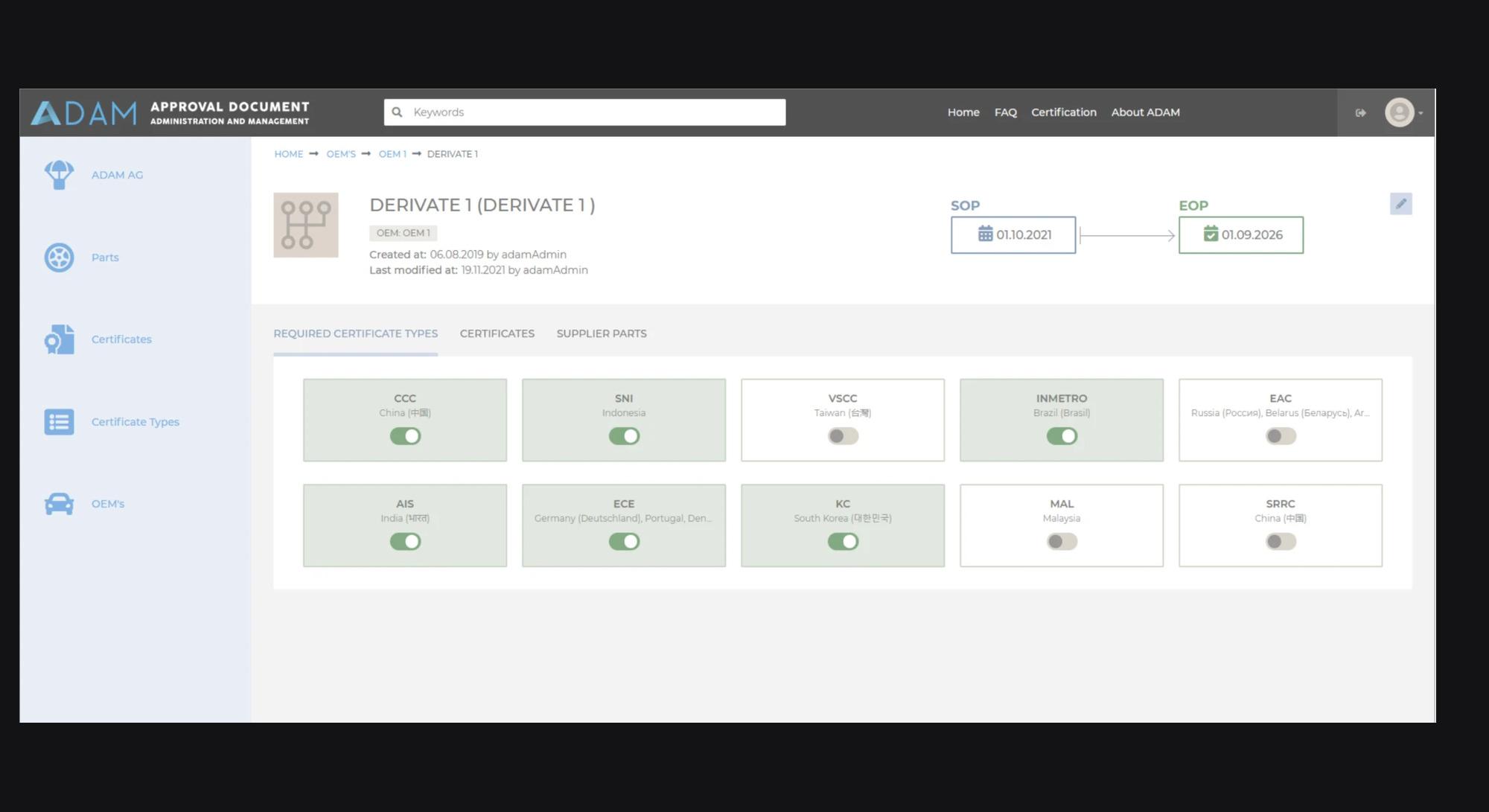
We turned the client's initial designs into a consistent interface: navigation, tables, filters, detail pages and dashboards, designed for people who work with certificates and parts every day. Working closely with the client, we also proposed UX, UI and functional improvements along the way.
Frontend application
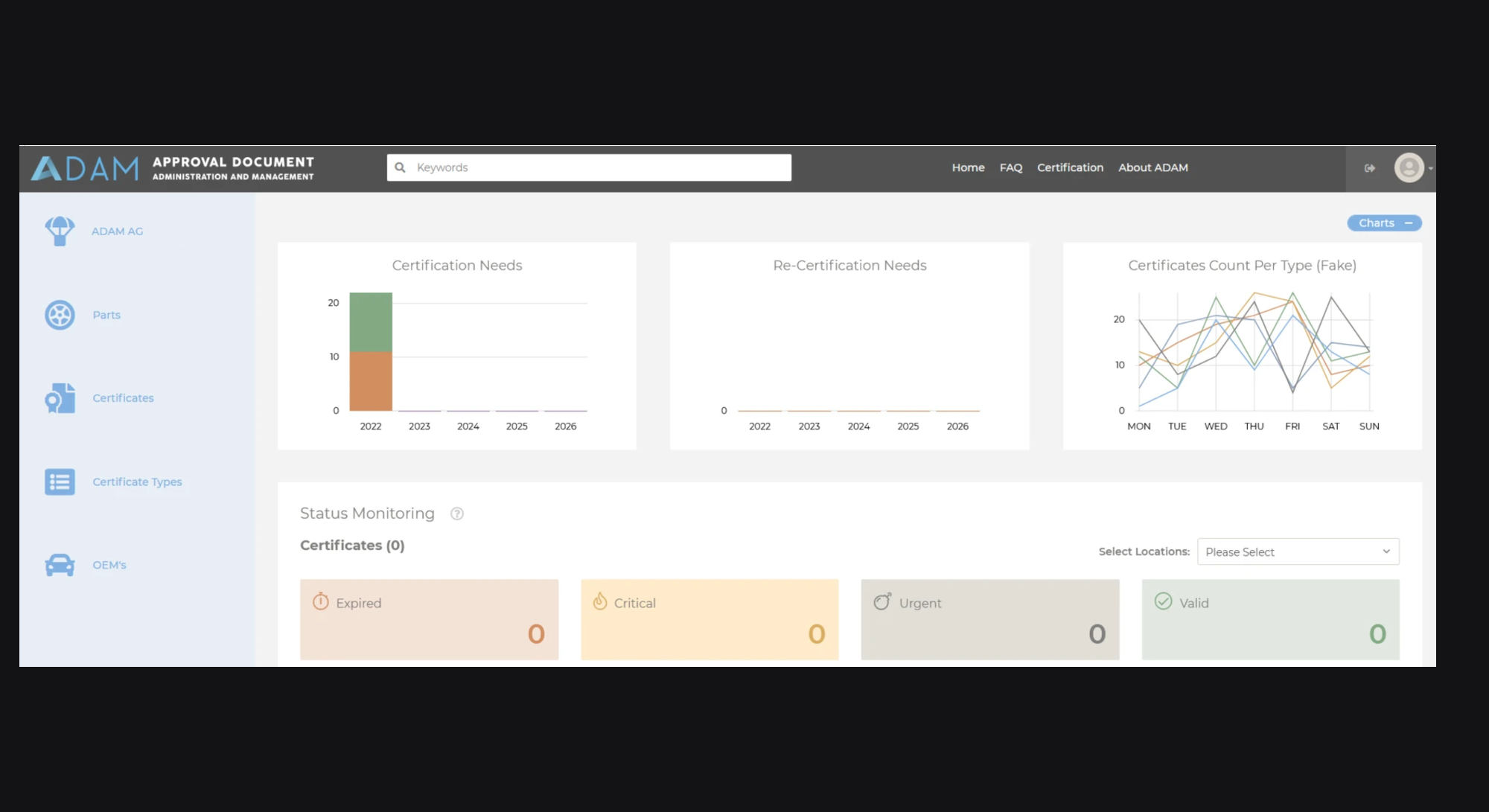
A web application for managing certification schemes, parts, certificates and car manufacturers, with a dashboard that shows which certificates are valid, expiring or expired. In total, more than 20 views across all key entities.
Integration with the client’s backend
The frontend was integrated with the API built by the client’s team. Close day-to-day collaboration between the two teams kept both sides aligned as the backend evolved.
CI/CD pipeline
Automated build and delivery of changes from development through user acceptance to production.


Technical architecture
Technology stack
Angular, TypeScript, Bootstrap, RxJava, Docker, Jenkins, GitLab.
Delivery methodology & governance
Engagement model
A dedicated team working as part of the client's product team.
Team & roles
The team included two frontend developers, a UX designer and a DevOps engineer.
Agile delivery approach
The team worked in two-week Scrum sprints with the standard ceremonies: planning, daily stand-ups, review and retrospective.



TESTIMONIAL
Client testimonial

"Having worked in IT for 25 years and running my own technology company for the past 12 years I can say that the team at Genix Solutions is by far and away the best I have ever worked with."